Most sports organizations announce their schedules through press releases, graphics, and social media posts.
The Savannah Bananas took a different approach.
On October 15, their 2027 Banana Ball City Selection Show aired on ESPN2, turning the announcement of upcoming tour destinations into a 90-minute entertainment production.
It's a remarkable example of how far the Banana Ball phenomenon has come.
“When fans are excited enough about your product that revealing where you'll play becomes an event, you've created something much bigger than a sports team.”
From Baseball Team to Entertainment Brand
The Savannah Bananas started with a simple challenge: make baseball more entertaining.
But their success goes beyond dancing players, unconventional rules, and viral social media moments.
They've fundamentally rethought the relationship between a sports organization and its audience.
Instead of treating entertainment as something that happens between innings, they've made it central to the entire experience.
That philosophy now extends to their content strategy, media partnerships, ticketing process, and major announcements.
The Numbers Tell the Story
In 2026, Banana Ball attracted more than 3 million fans across its live events.
The organization is now preparing for an even bigger 2027 season, with plans to visit 79 stadiums across 74 cities, including its first international games in Canada and Mexico.
The expansion includes 23 Major League Baseball stadiums and 10 football stadiums, with projected attendance of approximately 4.3 million.
Its media footprint continues to grow as well, supported by partnerships with ESPN and Disney.
What began as an alternative approach to baseball has evolved into a rapidly expanding sports entertainment property.
The Marketing Genius Behind the City Selection Show
Perhaps the most interesting part of the Banana Ball strategy is how the organization creates anticipation.
Traditionally, a schedule announcement is an operational update.
For Banana Ball, it's content.
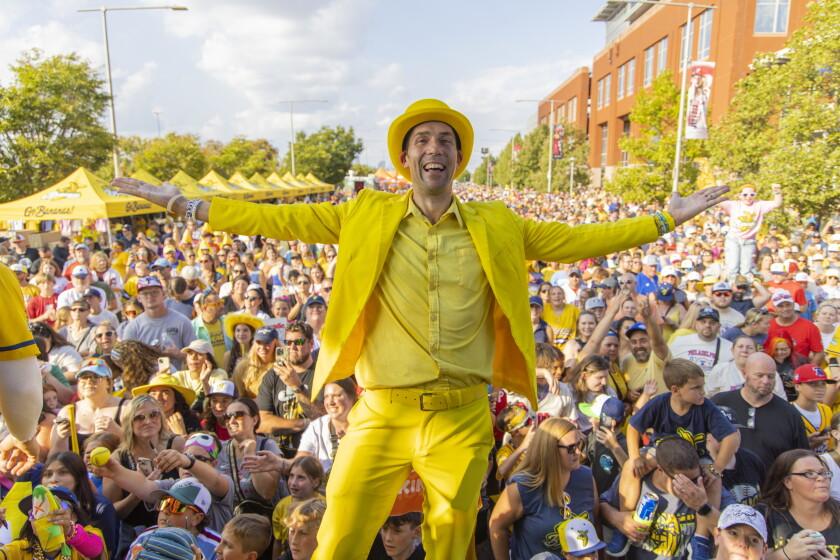
By transforming the announcement into a televised production, the organization creates another moment for fans to engage with the brand, discover upcoming experiences, and share their excitement.
The result is a marketing ecosystem where nearly every announcement can become an entertainment opportunity.
“The product isn't limited to the game. The product is the entire relationship with the fan.”
What Sports Organizations Can Learn
The Banana Ball phenomenon offers three important lessons.
1. Entertainment should be part of the brand, not just the event. Fan engagement doesn't begin at the stadium entrance or end after the final inning. Every interaction is an opportunity to strengthen the connection.
2. Build anticipation, not just awareness. The Savannah Bananas have created an audience that actively waits for their next announcement. That's a different level of brand engagement than simply reaching people with advertising.
3. Challenge the traditional playbook. Sports organizations often follow established approaches because that's how the industry has always operated. Banana Ball demonstrates the value of questioning those assumptions and experimenting with new ways to deliver an experience.
The Bigger Picture
The Savannah Bananas are proving that sports organizations can compete for attention beyond the traditional boundaries of their sport.
Their competition isn't limited to other baseball teams. They're competing in the broader entertainment economy, where audiences choose how to spend their time, attention, and money.
And they've found a way to make the experience compelling even when no game is being played.
“Don't just give fans something to watch. Give them something to anticipate, experience, and belong to.”
That's what makes Banana Ball one of the most fascinating stories in modern sports marketing.